

What Geography looks like at St Laurence
At St Laurence, our Geography curriculum inspires children to develop curiosity and fascination about the world around them. Through the study of people, places and environments, children gain an understanding of space, place and scale whilst developing an appreciation of how the world is connected.
We teach children about their local area and encourage them to compare their experiences with those of people living in other regions of the United Kingdom and across the world. Through enquiry, investigation and fieldwork, pupils develop the knowledge, skills and vocabulary needed to understand both the human and physical features of our planet.
Our curriculum aims
Through our Geography curriculum, children will:
• develop curiosity and fascination about the world around them
• gain a secure knowledge of where places are and what they are like
• understand how places are similar and different
• develop geographical vocabulary and subject knowledge
• learn how human and physical processes shape environments
• develop fieldwork skills and geographical techniques
• use maps, atlases, aerial photographs and digital mapping tools effectively
• understand current environmental and societal issues
• make connections between people, places and environments
• become informed and responsible global citizens
How we teach Geography
Geography is taught through carefully planned units built around engaging Enquiry Questions. These questions encourage children to investigate geographical concepts, think critically and apply their knowledge to real-world contexts.
Lessons include a range of activities, including:
• map work and atlas skills
• fieldwork and observation
• geographical enquiries and investigations
• use of aerial photographs and satellite imagery
• data collection and interpretation
• research using a variety of sources
• discussion and collaborative learning
• opportunities to communicate findings and conclusions
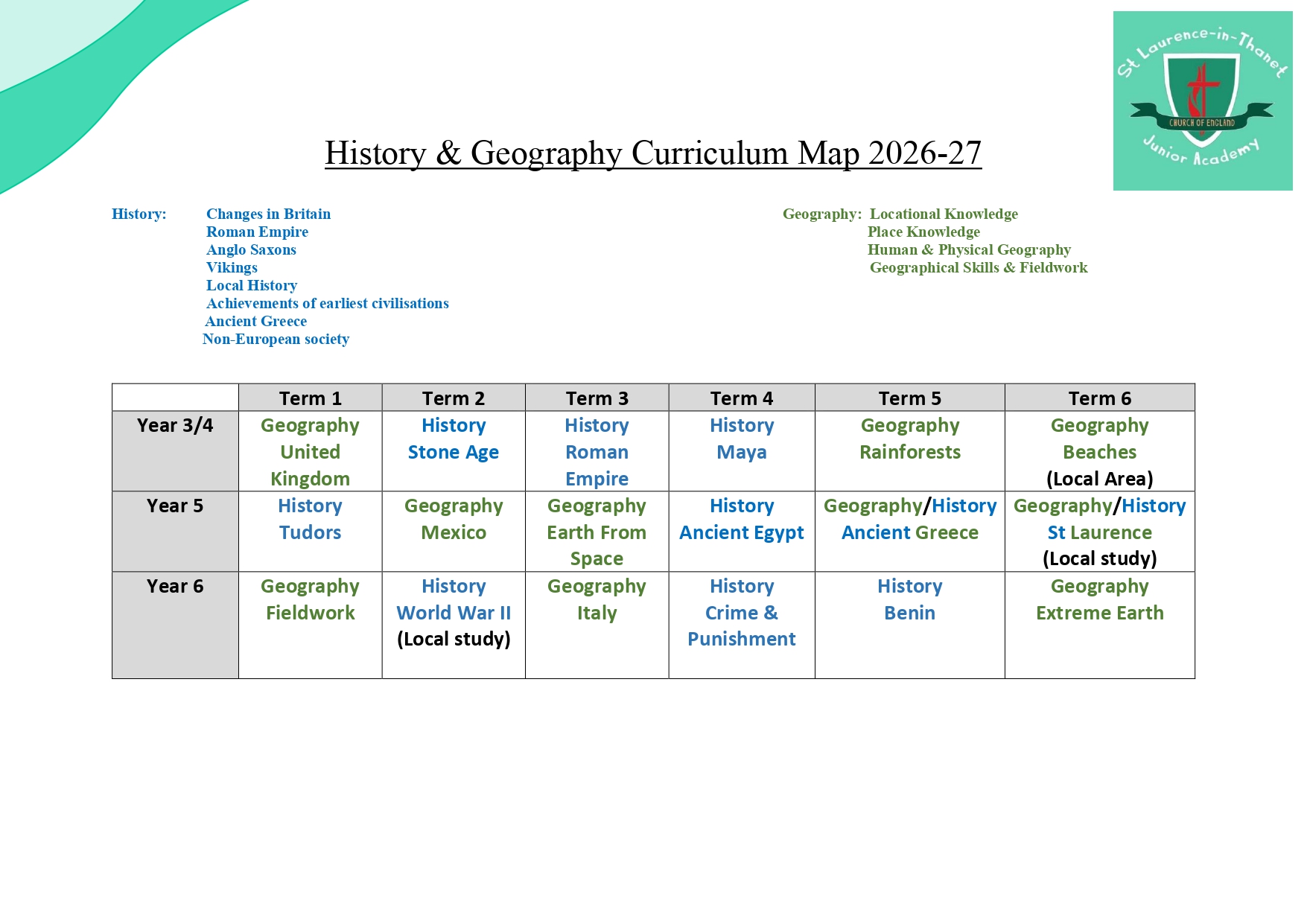
Each term, teachers plan units that build progressively on previous learning. Key geographical knowledge, skills and vocabulary are revisited regularly to help children make connections and strengthen understanding.
Cross-curricular links are made wherever appropriate. For example, Year 5 children link their learning in Earth and Space with Geography through the use of satellite imagery and digital mapping equipment.
Through our enquiry approach, children learn to ask questions, gather evidence, draw conclusions and evaluate their understanding.
.jpg)
What children learn
Throughout Key Stage 2, children progressively develop their knowledge and skills across the main areas of geography.
• Locational knowledge
• Place knowledge
• Human geography
• Physical geography
• Geographical enquiry
• Fieldwork
• Mapping and data interpretation
• Environmental awareness
By the end of Year 6
By the end of Key Stage 2, children will be able to:
• locate and describe a range of places and environments using geographical vocabulary
• explain similarities and differences between locations and regions
• understand key physical and human geographical processes
• use maps, atlases, aerial photographs and digital technologies confidently
• collect, analyse and present geographical information
• carry out fieldwork investigations with increasing independence
• understand the impact people have on environments and communities
• discuss current geographical and environmental issues
• communicate geographical understanding using appropriate terminology
• apply their geographical knowledge to understand the wider world
Enrichment and wider opportunities
Children have opportunities to enrich their geographical learning through theme days, visits and practical experiences. Geography is brought to life through events such as Earth Day, educational visits and outdoor learning opportunities.
Visits may include locations such as Dover Museum, Kent Life and Ramsgate Harbour, while practical experiences such as map work, forest school activities and investigations help children develop their understanding beyond the classroom.
These memorable experiences provide meaningful contexts for learning and inspire children's curiosity about the world around them.
Supporting all learners
Our Geography curriculum is designed so that all children can access learning, make progress and experience success.
Teachers adapt lessons using visual resources, modelling, practical activities, vocabulary support, discussion opportunities and scaffolded tasks. Key concepts and vocabulary are introduced carefully and revisited regularly to ensure that all pupils can build secure understanding over time.
Children are encouraged to investigate, explore and share ideas with confidence in a supportive learning environment.
Personal and spiritual development
Geography helps children develop a deeper understanding of the world and the people within it.
By learning about different countries, cultures and environments, pupils develop empathy, respect and appreciation for diversity. They learn about the challenges facing our planet and consider how their choices can impact local and global communities.
Geography encourages children to reflect on their place in the world, develop a sense of responsibility towards the environment and appreciate the interconnected nature of people's lives across the globe.